

Social Skills Groups
Specific Groups Tailored for Ages 5 through 21 years

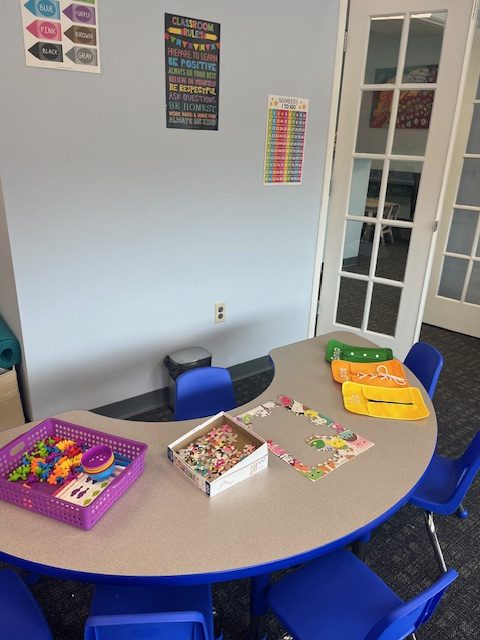
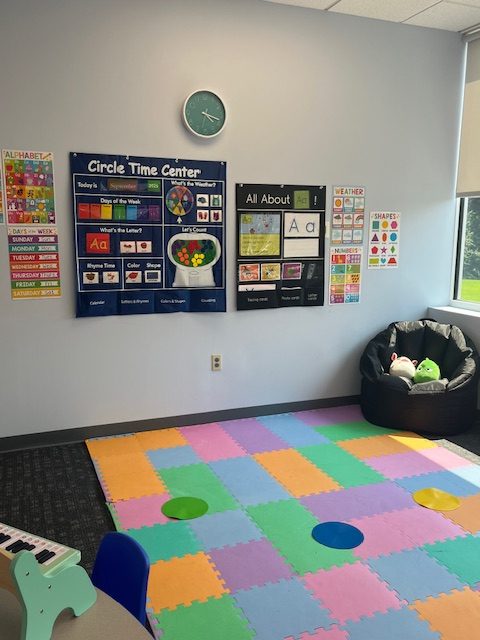
Our in-person, small group ABA sessions provide a supportive environment where children and young adults can build communication, self-regulation, and peer interaction skills. Led by clinical staff, each group uses evidence-based strategies like modeling, role-play, and reinforcement to help participants develop meaningful social connections.
Our Social Skills Groups, led by experienced clinical staff, offer structured, in-person Applied Behavior Analysis (ABA) sessions. Designed for small groups, these sessions maximize participation and peer interaction, helping children develop interpersonal and emotional skills to connect with others, navigate social situations, and form lasting friendships.
We utilize proven strategies such as modeling, role-play, guided practice, and reinforcement to teach skills. Each child receives individualized support within the group setting, allowing them to learn and apply new skills at their own pace.
Key Skill Domains:
- Turn-taking & Cooperative Play
- Conversation & Active Listening
- Emotion Identification & Self-Regulation
- Problem-Solving & Conflict Resolution
- Friendship Development & Maintenance
Empowering Social Success, Step by Step
We know that social success doesn’t happen overnight—it’s learned, practiced, and supported with intention. That’s why our Social Skills Groups are designed to help children build the confidence, communication, and emotional awareness they need to connect with others—step by step.

Turn-Taking & Cooperative Play
Learning to play with others, not just near them, is a critical early social milestone. We teach children how to:
- Wait their turn during games and shared activities
- Invite others to play and accept play invitations
- Share materials and space respectfully
- Follow group rules and routines
- Engage in parallel, associative, and cooperative play stages
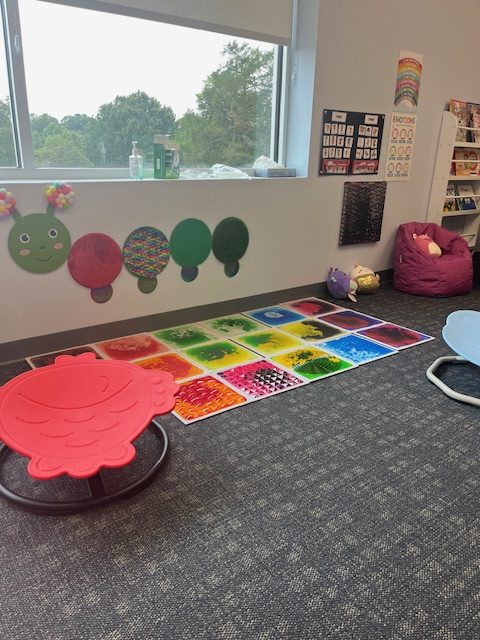
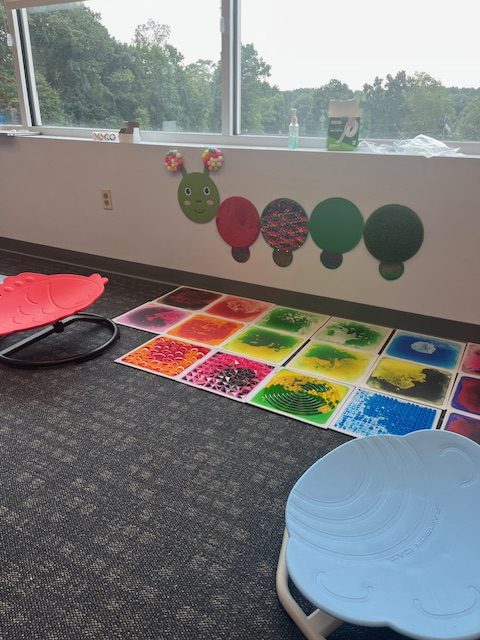
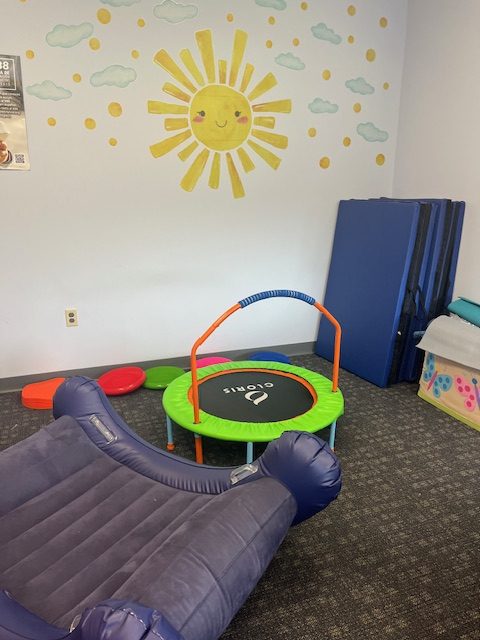
These skills are practiced through interactive games, structured play centers, and group routines—with plenty of adult modeling and positive reinforcement.
Conversational Skills & Active Listening
Strong social communication begins with the ability to start, maintain, and respond to conversations appropriately. In our groups, children learn how to:
- Greet peers and initiate interaction
- Ask and answer age-appropriate questions
- Use eye contact and body language that supports communication
- Practice conversational turn-taking
- Show interest in others through active listening
We embed these skills in real-time peer interactions and role-playing scenarios that reflect everyday social situations.

Emotion Identification & Self-Regulation
Understanding and managing emotions is essential for positive social engagement. We help children:
- Label basic emotions in themselves and others (e.g., happy, mad, frustrated)
- Recognize what different emotions look and feel like
- Use calming strategies such as deep breathing or asking for a break
- Express emotions in socially appropriate ways
- Develop coping tools to handle disappointment, change, or sensory overload
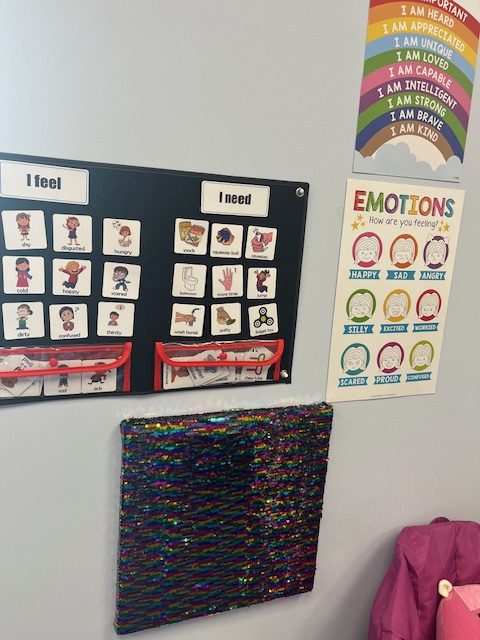
We often incorporate visual tools (e.g., Zones of Regulation), emotion charts, and modeled scenarios to support learning.

Problem-Solving & Conflict Resolution
Social situations often involve unexpected challenges. We teach children how to:
- Recognize a problem or conflict in peer interactions
- Think through possible solutions using simple problem-solving steps
- Use language to resolve disagreements (e.g., “Can I have a turn next?”)
- Ask for help when needed
- Learn from feedback and adapt to different social rules
These lessons are embedded in peer games, group discussions, and guided role-play activities.

Building & Maintaining Friendships
Friendships are built on trust, kindness, and shared experiences. We guide children in:
- Learning what it means to be a “good friend”
- Practicing inclusive behaviors (e.g., inviting others, showing empathy)
- Understanding others’ perspectives and feelings
- Maintaining positive peer relationships over time
- Repairing relationships when misunderstandings happen
These skills grow naturally through ongoing peer interactions, facilitated conversations, and feedback from supportive staff.






Admission Criteria:
- Ages 3 to 21 years old
- Formal diagnosis of Autism Spectrum Disorder (ASD) or a related developmental disorder.
- Additional behavioral health diagnoses may be considered if ABA is clinically indicated.
- Demonstrates delays in communication, social skills, or self-help abilities.
Admission is subject to available clinician capacity and successful completion of the intake assessment.
Exclusions:
- No formal diagnosis of ASD or related condition.
- Primary issues are not behavioral in nature.
- Active, untreated psychiatric conditions (e.g., psychosis, severe mood disorder).
- Severe, unstabilized medical conditions requiring non-ABA medical support.
- Unsafe or inaccessible treatment environments.
- Family refusal to participate in required caregiver training.
- Inability to obtain insurance authorization or funding, despite reasonable effort.
Schedule:
Call or message us for details on available social skills groups and guidance on which option aligns with your child’s age and goals.

Together, let’s empower children to embrace a positive mindset, build resiliency, and experience transformational growth.
Reach out today to speak to one of our experienced clinicians
Referral Information
Referrals will be considered from any interested agency or party including, but not limited to, inpatient units, outpatient programs, schools, county mental health clinics, private mental health practitioners, health professionals, patients and families.
If you would like to make a referral, please complete the referral form below and we will get back to you shortly.
If you have any questions, you may also reach out by phone to (610) 999-1908.
Your message has been sent
